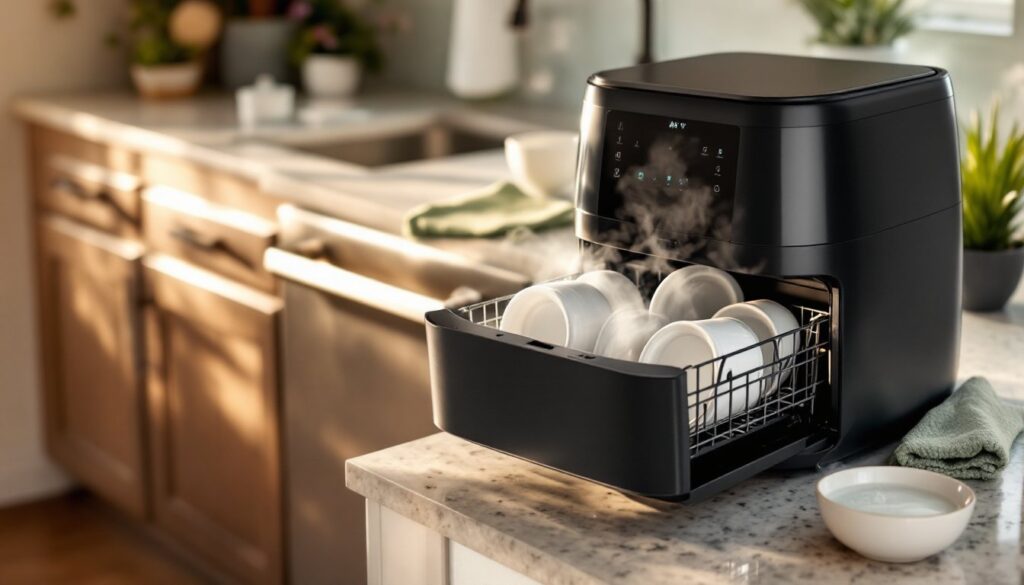
Ninja air fryers have become kitchen staples for good reason, they’re versatile, efficient, and crank out crispy results without deep frying. But after making a batch of wings or roasted vegetables, the cleanup question hits: can you just toss the parts in the dishwasher, or will that wreck the unit? The answer isn’t one-size-fits-all. While many Ninja air fryer components are dishwasher safe, others will degrade, warp, or lose their nonstick coating if exposed to the harsh detergents and high heat of a dishwasher cycle. This guide breaks down exactly which parts can handle the dishwasher, which ones need hand-washing, and how to clean everything properly without voiding the warranty or shortening the appliance’s lifespan.
Table of Contents
ToggleKey Takeaways
- Ninja air fryer baskets, crisper plates, and pans are dishwasher safe only on the top rack, where water pressure and heat are less intense than the bottom rack.
- Never put the main housing unit, heating elements, or digital control panels in the dishwasher, as water exposure can cause electrical damage and void your warranty.
- Using a standard dishwasher detergent with a normal wash cycle and air-drying protects the nonstick coating better than heavy-duty detergents and high-heat sanitize settings.
- Hand-wash all non-dishwasher-safe parts like the housing and gaskets with mild soap and a damp cloth, and use a baking soda paste for stubborn residue.
- Avoid abrasive scrubbers, metal utensils, and rapid temperature changes to prevent coating damage and maintain your Ninja air fryer’s performance and warranty coverage.
Which Ninja Air Fryer Parts Are Dishwasher Safe?
Most Ninja air fryer models share a similar construction, and the good news is that several key components are designed to go straight into the dishwasher. Removable baskets, crisper plates (also called crisper trays), and cooking pans are typically dishwasher safe on the top rack. These are the parts that come into direct contact with food and accumulate the most grease and residue, so being able to run them through a dishwasher cycle saves significant time.
For models like the Ninja Foodi series, dual-zone air fryers, or the larger Ninja FlexDrawer, the manufacturer explicitly labels these components as dishwasher safe in the user manual. The nonstick coating on baskets and pans is formulated to withstand dishwasher detergents when placed on the top rack, where water pressure and heat are less intense than the bottom rack.
Always check the specific manual for the model in question. Ninja occasionally updates coatings or materials between product generations, and while the majority of current models (as of 2026) feature dishwasher-safe baskets and trays, older units or specialty models may have different care instructions. If the manual is missing, Ninja’s support site provides downloadable PDFs by model number.
One key detail: top rack only. Placing nonstick components on the bottom rack exposes them to higher temperatures and more aggressive spray jets, which can degrade the coating over time. Stick to the top rack, and avoid using high-heat drying cycles if possible, air drying or a low-heat setting is gentler on nonstick surfaces.
Parts You Should Never Put in the Dishwasher
The main housing unit, the part containing the heating element, fan, and electrical components, should never go anywhere near water, let alone a dishwasher. This might seem obvious, but it’s worth stating clearly: the main body is an electrical appliance. Wipe it down with a damp cloth only, and never submerge it.
Heating elements and internal components are off-limits as well. Some Ninja models have removable heating coils or exposed elements that can be accessed for cleaning. These should be wiped gently with a dry or slightly damp cloth after the unit has cooled completely. Water exposure can cause corrosion, electrical shorts, or damage to the heating surface.
Certain lids, control panels, and digital display units are also not dishwasher safe. If the air fryer has a lid with embedded electronics, touchscreens, or integrated seals, hand-wash only. High heat and moisture can warp plastic housings, fog display screens, or compromise gasket seals that maintain proper air circulation during cooking.
For models with silicone or rubber gaskets, check the manual. While some silicone components can technically handle a dishwasher, they’re often small, easy to lose, and prone to absorbing detergent odors. Hand-washing these parts in warm, soapy water is usually the safer, more practical choice.
How to Properly Clean Dishwasher-Safe Ninja Air Fryer Components
Before loading any air fryer parts into the dishwasher, scrape off loose food debris with a silicone spatula or soft brush. Large crumbs, baked-on cheese, or charred bits can clog dishwasher filters or bake onto the parts during the drying cycle, making cleanup harder instead of easier.
Place baskets, crisper plates, and pans on the top rack, positioned so water can reach all surfaces. Avoid nesting parts too tightly, air fryers have lots of perforations and vents that need direct water flow to come clean. If the basket has a handle, angle it so it doesn’t block spray arms.
Use a standard dishwasher detergent, but skip the heavy-duty degreasers or anything with bleach. Nonstick coatings don’t need aggressive chemicals, and harsh formulas can break down the coating over time. A typical powder, gel, or pod designed for everyday dishwashing will handle grease just fine.
Select a normal or light wash cycle rather than heavy-duty or sanitize settings. The high heat of sanitize cycles can exceed the recommended temperature range for some nonstick finishes. If the dishwasher has a no-heat or air-dry option, use it. Otherwise, crack the door open at the end of the cycle and let parts air-dry to avoid prolonged exposure to residual heat.
After the cycle, inspect parts for any remaining residue. Occasionally, baked-on oils or sticky marinades may need a second pass or a quick hand scrub. If food is still stuck, soak the part in warm, soapy water for 15–20 minutes, then gently scrub with a nonabrasive sponge before running it through the dishwasher again.
Best Practices for Hand-Washing Non-Dishwasher Safe Parts
For the main housing, unplug the unit and let it cool completely before cleaning. Wipe the exterior with a damp microfiber cloth and a drop of mild dish soap if needed. For stubborn splatters inside the cooking chamber, a paste of baking soda and water works well, apply it, let it sit for a few minutes, then wipe clean. Avoid abrasive scrubbers that can scratch plastic or metal finishes.
Heating elements require extra care. Once cool, use a dry soft-bristle brush (a clean paintbrush or pastry brush works) to remove any debris. If grease has built up, dampen a cloth very lightly with soapy water, wring it nearly dry, and gently wipe the element. Make sure it’s completely dry before using the air fryer again.
For lids with control panels or digital displays, wipe with a barely damp cloth. Don’t spray cleaner directly onto the panel, it can seep into seams and damage electronics. If there’s a silicone gasket in the lid, remove it (if detachable) and wash separately in warm, soapy water, then dry thoroughly before reassembling.
Silicone or rubber gaskets can trap grease and odors. Soak them in a solution of warm water and a tablespoon of white vinegar for 10 minutes, then scrub gently with a soft brush. Rinse well and air-dry completely. If odors persist, a paste of baking soda can be rubbed on, left for a few minutes, then rinsed.
Never use steel wool, scouring pads, or harsh chemical cleaners on any air fryer component. These will scratch nonstick coatings, dull finishes, and can leave residues that affect food flavor or safety.
Does Dishwashing Affect Your Ninja Air Fryer’s Warranty?
As of 2026, Ninja’s warranty explicitly covers dishwasher-safe components when used according to the manual’s instructions. That means if the user guide says the basket is top-rack dishwasher safe and it’s cleaned that way, any resulting damage from normal dishwasher use should fall under warranty coverage, assuming it’s a manufacturing defect, not user abuse.
But, putting non-dishwasher-safe parts in the dishwasher can void the warranty for those specific components. For example, if someone runs the main housing through a dishwasher and fries the electronics, Ninja won’t cover the repair or replacement. The warranty is conditional on following care instructions.
Most Ninja air fryers come with a one-year limited warranty that covers defects in materials and workmanship. It does not cover damage from misuse, improper cleaning, or normal wear and tear. If a nonstick coating starts peeling after a year of top-rack dishwasher use as directed, that’s potentially a warranty claim. If it peels after repeated bottom-rack cycles with a sanitize setting, that’s user error.
Keep the purchase receipt and model number handy if a warranty claim becomes necessary. Ninja’s customer service may ask for proof of purchase, photos of the damage, and confirmation that cleaning was done per the manual. Registering the product on Ninja’s website after purchase can streamline this process.
Common Mistakes That Can Damage Your Air Fryer
Using abrasive scrubbers or metal utensils on nonstick surfaces is a fast track to coating damage. Even if food is stubbornly stuck, reach for a plastic scraper or nylon brush, not a Brillo pad. Once the nonstick layer is compromised, it won’t perform as well and can start flaking.
Overloading the dishwasher is another mistake. When baskets and pans are crammed in with pots, dishes, and utensils, they can get knocked around, scratched, or prevent proper water flow. Give air fryer parts enough space to come clean without taking a beating.
Skipping the preheat or cool-down can lead to warping, especially with rapid temperature changes. Don’t rinse a hot basket under cold water immediately after cooking, let it cool for a few minutes first. Thermal shock can warp metal or crack certain plastics over time.
Using cooking sprays with propellants or additives can leave a sticky residue that’s tough to remove and can build up even with dishwashing. Many air fryer manufacturers, Ninja included, recommend using a light mist of pure oil from a refillable spray bottle instead of aerosol sprays. If residue does build up, a paste of baking soda and a few drops of dish soap can help lift it.
Neglecting regular cleaning is a mistake DIYers make when an appliance seems “clean enough.” Grease and oil residue accumulate over time, even in small amounts. This buildup can carbonize, create smoke during cooking, and eventually affect the air fryer’s performance. A quick wipe-down after each use and a thorough clean weekly (or after heavy use) keeps everything running smoothly.
Conclusion
Cleaning a Ninja air fryer doesn’t have to be a chore, and knowing which parts are dishwasher safe makes the job faster and easier. Stick to top-rack placement for baskets, pans, and crisper plates, hand-wash the housing and electronics, and avoid common pitfalls like abrasive scrubbers or high-heat drying cycles. Follow the manual’s care instructions, and the air fryer will keep cranking out crispy, delicious results for years.