Painting kitchen cabinets is one of the most cost-effective ways to overhaul a kitchen without replacing anything. But choosing the wrong color can make a bright kitchen feel like a cave or turn a cozy space into a sterile lab. The right cabinet color ties together countertops, backsplashes, flooring, and lighting, it’s the anchor of the whole room. Whether someone’s flipping a house or freshening up their own space, understanding which colors work with natural light, existing finishes, and current design trends can mean the difference between a weekend project they’re proud of and one they repaint in six months.
Table of Contents
ToggleKey Takeaways
- Paint colors for kitchen cabinets set the tone for your entire kitchen’s appearance and resale value, making the choice between timeless whites, bold navy or black, and warm neutrals critical to your design success.
- Natural light is the deciding factor when selecting cabinet paint colors—test large sample boards (at least 2×2 feet) at different times of day to see how colors truly appear in your specific kitchen.
- White cabinets remain the most popular choice because they reflect light and make spaces feel larger, but offer variety through warm whites like Benjamin Moore White Dove, cool whites like Sherwin-Williams Pure White, and off-whites like Sherwin-Williams Alabaster.
- Dark cabinet colors like navy, black, and deep green create drama but require flawless surface prep, proper lighting, and the right surrounding elements—black in particular shows every imperfection and demands semi-gloss or high-gloss finishes.
- Satin finish is the most practical choice for DIY cabinet painting, balancing durability and cleanability, while two-tone combinations (dark lowers with light uppers, or a painted island accent) add visual interest without overwhelming the space.
- Proper preparation including deglossing, priming with a bonding primer, and using quality paint like Benjamin Moore Advance prevents issues like brush strokes, drips, and color bleed-through, especially critical with darker shades.
Why Cabinet Color Matters More Than You Think
Cabinets dominate visual real estate in most kitchens. Unlike wall paint, which gets interrupted by windows, appliances, and decor, cabinetry forms continuous blocks of color at eye level. A poorly chosen shade can make a small kitchen feel cramped or clash with undertones in countertops and flooring.
Natural light is the deciding factor. A color that looks crisp in a showroom under LED strips can read completely different in a north-facing kitchen with limited windows. Warm whites can look dingy without enough light, while cool grays can feel icy. Before committing, homeowners should paint large sample boards (at least 2×2 feet) and observe them at different times of day.
Cabinet color also affects resale strategy. Neutral tones appeal to the widest buyer pool, while bold choices can be polarizing. That doesn’t mean bold is wrong, it just requires confidence that the overall design supports it. And if someone’s painting cabinets themselves, they should know that dark colors show brush strokes, drips, and surface flaws more readily than lighter shades. Proper prep (deglossing, priming with a bonding primer like Zinsser B-I-N or KILZ Adhesion) becomes even more critical.
Timeless White and Off-White Shades
White cabinets remain the most popular choice for good reason: they reflect light, make spaces feel larger, and pair with nearly any countertop or backsplash. But “white” isn’t a single color, there are warm whites, cool whites, and everything in between.
Benjamin Moore Simply White and Sherwin-Williams Pure White are true whites with minimal undertones, making them versatile but sometimes stark in kitchens with poor lighting. For a softer look, Benjamin Moore White Dove offers a hint of warmth without reading as cream, and it’s forgiving in both natural and artificial light.
Off-whites like Sherwin-Williams Alabaster or Benjamin Moore Cloud White add subtle warmth and work well with brass or gold hardware, wood tones, and warm-toned stone countertops. These shades prevent the sterile, builder-grade look that stark whites can have in cookie-cutter kitchens.
One caution: white shows grime. Kitchens near entryways or in homes with kids will need regular cleaning. A satin or semi-gloss finish (more on that later) makes wipe-downs easier. And if the existing cabinets are stained wood, a bonding primer and two coats of quality paint, Benjamin Moore Advance or Sherwin-Williams Emerald Urethane, are necessary to avoid bleed-through and ensure durability.
Bold and Dramatic: Navy, Black, and Deep Greens
Dark cabinets create drama and make a statement, but they require the right environment. Kitchens with ample natural light, white or light-colored walls, and bright countertops can handle deep tones without feeling oppressive.
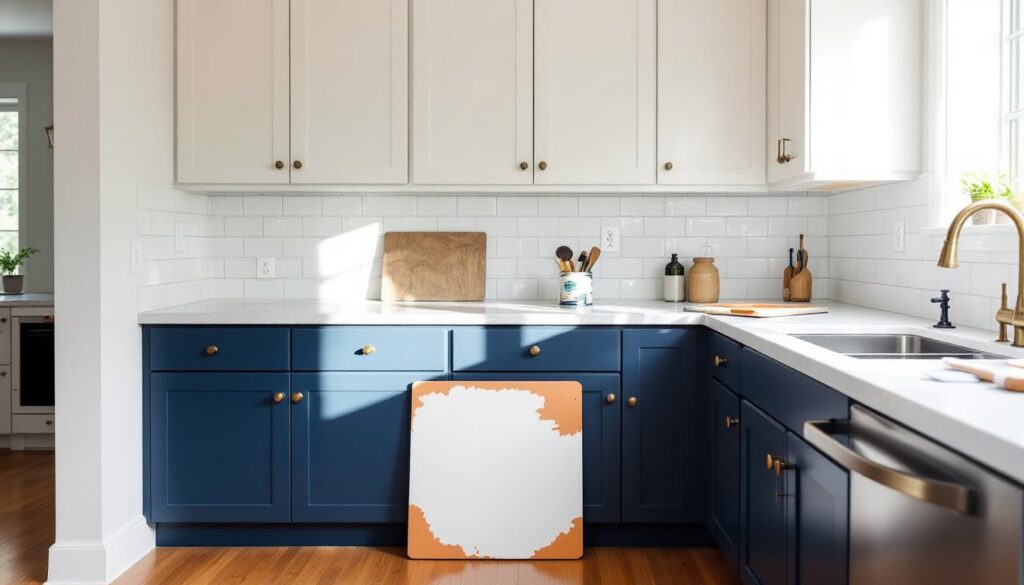
Navy blues like Sherwin-Williams Naval or Benjamin Moore Hale Navy are current favorites. They read sophisticated rather than stark and pair beautifully with brass, copper, or matte black hardware. Navy works in both traditional and modern kitchens, especially when paired with white subway tile or marble countertops.
Black cabinets are high-risk, high-reward. Done right, think glossy black lowers with open shelving or glass uppers, they can look sleek and expensive. Done wrong, they close in a room. Benjamin Moore Black or Sherwin-Williams Tricorn Black are true blacks that don’t shift blue or brown. Black shows every fingerprint and dust speck, so semi-gloss or high-gloss finishes are almost mandatory.
Deep greens like Sherwin-Williams Jasper or Benjamin Moore Hunter Green bring richness without the severity of black. These shades work well in kitchens with wood floors, natural stone, and vintage or farmhouse aesthetics. Greens have warm and cool variants, so testing samples against existing finishes is essential.
A word of caution: dark colors require flawless surface prep. Any dents, dings, or uneven areas will be magnified. Filling old hardware holes with wood filler, sanding to 220-grit smoothness, and applying a high-quality primer are non-negotiable steps.
Warm Neutrals That Add Character
Warm neutrals sit between stark white and bold color, offering character without overwhelming a space. These shades work especially well in kitchens with wood floors, butcher block countertops, or rustic design elements.
Greige (gray-beige hybrids) like Sherwin-Williams Agreeable Gray or Benjamin Moore Revere Pewter are chameleons, they shift between warm and cool depending on lighting and surrounding colors. Greige cabinets pair well with stainless appliances, white subway tile, and both warm and cool countertops. They’re a safe middle ground for homeowners who want something beyond white but aren’t ready for bold color.
Soft grays like Benjamin Moore Stonington Gray or Sherwin-Williams Repose Gray offer a cooler neutral that still feels approachable. These work in modern and transitional kitchens, especially with white or light quartz countertops and matte black or brushed nickel hardware.
Warm taupes and beiges like Sherwin-Williams Accessible Beige bring coziness without reading as dated “builder beige.” These tones complement natural materials, think travertine backsplashes, terracotta tile, or reclaimed wood accents.
The challenge with neutrals is avoiding muddy or flat results. Proper lighting, both natural and layered artificial (recessed cans, under-cabinet LEDs, pendants), keeps neutrals from looking drab. And because neutrals are subtle, the paint quality matters. Cheap paint can look chalky or uneven: Benjamin Moore Advance or Sherwin-Williams ProClassic offer superior leveling and durability.
Two-Tone Cabinet Color Combinations
Two-tone cabinets add visual interest and can solve design challenges, like making a kitchen with varying ceiling heights feel cohesive, or breaking up an all-white space.
The most common approach: dark lowers, light uppers. Navy or black base cabinets grounded by White Dove or Simply White uppers create contrast without overwhelming the space. This combination works especially well in kitchens with islands, where the island can be painted a third accent color (deep green or a bold blue).
Another strategy: paint the island a different color than the perimeter cabinets. A greige perimeter with a Sherwin-Williams Evergreen Fog island, for instance, adds a focal point without committing the entire kitchen to color. This approach also allows homeowners to test a bold shade on a smaller surface area.
Open shelving or glass-front uppers paired with painted lowers is another two-tone variation. Keeping uppers natural wood or white while painting lowers navy or green balances openness with color.
When going two-tone, consistent hardware and finish (all satin, or all semi-gloss) keeps the look intentional rather than chaotic. And it’s worth noting: two-tone means more taping, more color changes, and more room for error. Crisp lines require quality painter’s tape (3M ScotchBlue or FrogTape) and patience.
How to Choose the Right Paint Finish
Finish matters as much as color. Kitchens are high-traffic, high-moisture environments, so durability and cleanability trump aesthetics.
Satin offers a subtle sheen that hides imperfections better than gloss but wipes clean more easily than matte. It’s the most common choice for DIY cabinet painting and works across all color families. Benjamin Moore Advance in satin is a favorite among DIYers for its smooth leveling and minimal brush marks.
Semi-gloss reflects more light, making colors appear richer and slightly brighter. It’s more durable than satin and resists moisture and grease better, but it highlights surface flaws. If cabinet doors aren’t perfectly smooth after prep, semi-gloss will show it. Sherwin-Williams Emerald Urethane Trim Enamel in semi-gloss is a go-to for professional-grade durability.
Matte or flat finishes are trendy in high-end kitchens, offering a soft, modern look. But they’re harder to clean and more prone to scuffing. Unless someone’s committed to gentle maintenance and touch-ups, matte isn’t practical for most households.
High-gloss is rare on cabinets outside of ultra-modern or luxury kitchens. It’s extremely durable and easy to wipe, but it shows every imperfection and requires spray application for a factory-like finish. Most DIYers should skip this unless they’re experienced with an HVLP sprayer.
Finish also interacts with color. Dark colors in satin can look flat: semi-gloss gives them depth. Light colors in semi-gloss can feel too shiny: satin keeps them soft. Test samples in the actual finish, not just the color.
Conclusion
Cabinet color shapes how a kitchen feels every day, not just in photos. Whether going classic white, moody navy, or a warm neutral, the key is testing samples in the actual space, prepping surfaces properly, and choosing a durable finish. DIYers who take their time with prep, use quality paint, and consider how color interacts with light and existing finishes will end up with a kitchen they’re proud to use, and one that holds up to real life.