The LG Signature refrigerator line represents the pinnacle of kitchen appliance engineering, blending high-end design with cutting-edge technology. Unlike standard refrigerators that merely keep food cold, these units function as statement pieces that transform kitchen aesthetics while delivering exceptional performance. For homeowners planning a kitchen remodel or upgrading appliances, understanding what separates this luxury line from conventional models is essential. This guide breaks down the features, performance specs, and real-world value of LG Signature refrigerators to help determine if the premium price tag aligns with actual needs and expectations.
Table of Contents
ToggleKey Takeaways
- The LG Signature refrigerator features dual evaporator systems and fingerprint-resistant textured steel that deliver superior food preservation and kitchen aesthetics compared to standard models.
- InstaView Door-in-Door technology reduces cold air loss by 41% and isolates frequently accessed items, lowering energy costs while maintaining food quality.
- Smart ThinQ connectivity enables adaptive cooling cycles, self-diagnostic alerts, and energy management integration that prevents food spoilage and extends appliance lifespan.
- Premium pricing ($4,200–$6,000) requires careful ROI evaluation, as energy savings alone don’t offset costs, but longevity, reduced food waste, and kitchen resale value justify the investment for high-end renovations.
- Flush installation against cabinetry and ergonomic design elements address modern kitchen integration and accessibility needs that standard refrigerators cannot match.
What Makes the LG Signature Refrigerator Stand Out?
LG Signature refrigerators distinguish themselves through three core elements: materials, engineering precision, and integration capabilities that standard appliances can’t match.
The exterior features textured steel panels that resist fingerprints without relying on coatings that wear off over time. The metal itself undergoes a grain treatment process similar to architectural finishes, giving it a matte appearance that hides smudges naturally. This matters in real-world use, kitchens with kids, frequent cooking, or high traffic won’t show constant handprints like glossy stainless models.
Internally, the dual evaporator system maintains separate cooling loops for refrigerator and freezer compartments. This isn’t just marketing language. Single-evaporator systems (found in most fridges) pull air from one compartment to cool the other, causing odor transfer and humidity issues. Dual evaporators prevent freezer burn and keep produce crisper longer by optimizing humidity independently.
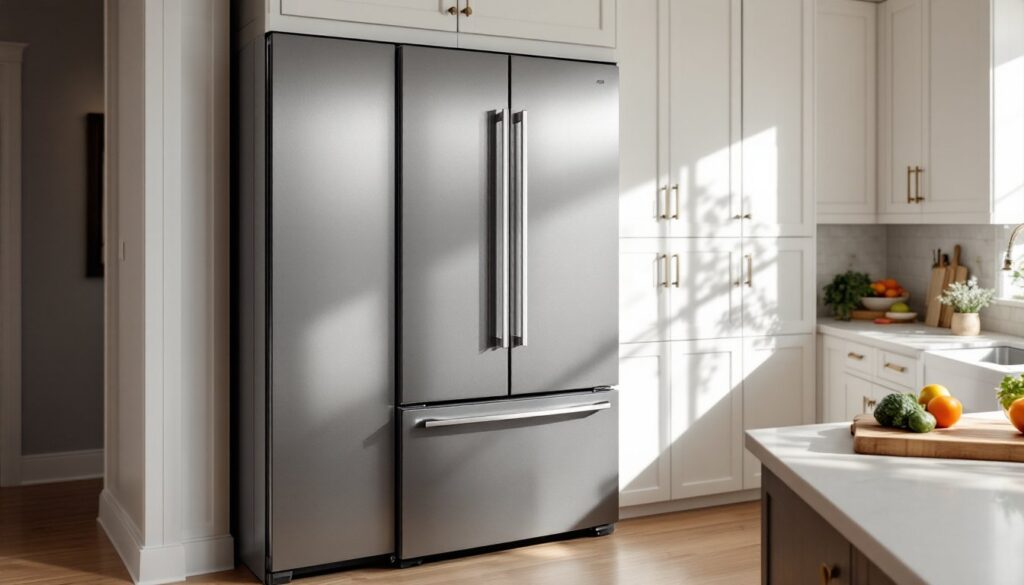
The door hinge engineering allows for a true flush installation against cabinetry, critical for modern kitchen designs where appliances integrate into millwork. Standard counter-depth models still protrude 1-2 inches. LG Signature units sit perfectly flush when installed correctly, though this requires precise measurements during kitchen planning, the cabinet depth must accommodate the unit’s 24-inch depth (actual, not nominal).
Key Features and Advanced Technology
InstaView Door-in-Door Technology
The InstaView glass panel becomes transparent when users knock twice, illuminating the interior without opening the door. The Door-in-Door compartment reduces cold air loss by approximately 41% compared to opening the full door, according to LG’s testing data.
The practical benefit shows up in energy bills and food preservation. Every full door opening releases cold air that the compressor must replace, multiplied across dozens of daily openings in active households, this adds measurable cost. The Door-in-Door section stores frequently accessed items (beverages, condiments, snacks) in an isolated compartment with its own gasket seal.
The glass uses tempered, UV-treated material that blocks light penetration when not activated, preventing UV degradation of light-sensitive foods. When activated, the LED array provides clear visibility without heat generation. For homeowners integrating this into cabinetry, note that the InstaView panel requires minimum 2-inch clearance from adjacent cabinet faces when the door opens fully to 90 degrees.
Smart Connectivity and ThinQ Integration
The ThinQ app provides remote monitoring and control via Wi-Fi, but the real utility lies in diagnostic capabilities and adaptive cooling. The system tracks usage patterns and adjusts cooling cycles accordingly, if the door opens frequently during morning hours, it pre-cools to compensate for upcoming temperature fluctuations.
Smart diagnosis allows the refrigerator to self-report issues to LG service before complete failure occurs. The system monitors compressor performance, temperature variances, and door seal integrity, sending alerts when metrics fall outside normal parameters. This prevents the common scenario of discovering a failed fridge only after food spoils.
Integration with voice assistants (Amazon Alexa, Google Assistant) enables hands-free operation, though practical applications remain limited, most users don’t need to voice-command their refrigerator. The more valuable integration connects to smart home energy management systems, allowing the unit to shift heavy cooling cycles to off-peak electricity hours in markets with time-of-use utility rates.
Design and Aesthetics: Where Form Meets Function
LG Signature refrigerators come in three finish options: textured steel, matte black stainless, and platinum silver. The textured steel dominates high-end installations due to its neutral appearance that complements both warm and cool kitchen palettes.
The interior lighting system uses theater-grade LED strips that provide even illumination without glare or shadows. Unlike standard refrigerators with single-point lighting that creates dark corners, the perimeter lighting design ensures visibility in all compartments. The LEDs draw minimal power and generate virtually no heat, critical since traditional bulbs inside refrigerators work against the cooling system.
The handle design uses solid metal construction with contoured grips that accommodate different hand sizes. This seems minor until considering accessibility, users with arthritis or reduced grip strength need handles that don’t require full-hand wrapping to operate. The ergonomic angle reduces strain on wrist joints.
For kitchen designers and contractors, the installation clearance requirements demand attention. LG specifies 1/2-inch side clearance and 1-inch rear clearance for proper airflow around the condenser. The unit requires a dedicated 15-amp circuit per NEC standards, it shouldn’t share a circuit with other major appliances. Water line connection for the ice maker requires 1/4-inch copper or braided stainless supply line with shut-off valve access, ideally placed behind adjacent cabinetry for service access without moving the refrigerator.
Performance and Storage Capacity
The flagship LRSXS2706S model offers 27 cubic feet of storage with a French door configuration. To contextualize that capacity: it holds approximately 20 paper grocery bags worth of food, suitable for households of four to six people with weekly shopping habits.
The cooling performance maintains ±1°F temperature stability across all zones, measured at multiple points inside the compartment. Standard refrigerators typically show 3-5°F variance between top and bottom shelves, causing uneven food preservation. The precision cooling uses inverter compressor technology that modulates speed continuously rather than cycling on/off, reducing temperature swings and noise.
Freezers maintain 0°F consistently, critical for long-term food storage. The ice maker produces 3.5 pounds daily, sufficient for most households but undersized for those who entertain frequently or rely on ice for medical needs (physical therapy, cooling applications). A supplemental ice source might be necessary for specialized use cases.
The crisper drawers feature humidity controls that actually work, a slider mechanism adjusts vent openings to increase or decrease moisture retention. Setting it to high humidity (vents closed) keeps leafy greens fresh for 7-10 days. Low humidity (vents open) prevents condensation that causes berries and peppers to mold prematurely. The drawers use impact-resistant polycarbonate rather than thin plastic, reducing crack risk when loading heavy items.
Pricing and Value Considerations
LG Signature refrigerators retail between $4,200-$6,000 depending on configuration and retailer, as of April 2026. That’s 3-4 times the cost of quality mid-range units from the same manufacturer.
The value equation depends on several factors. The energy efficiency rating (ENERGY STAR certified) translates to approximately $65-85 annual operating cost in average U.S. electricity markets, compared to $85-120 for standard models. Over a 15-year lifespan (typical for quality refrigerators with proper maintenance), the energy savings total $300-525, not enough to offset the premium price through utility savings alone.
The warranty coverage includes one year comprehensive and ten years on the compressor, better than standard appliance warranties but not exceptional. Extended warranty purchases rarely make financial sense unless the household has history of hard appliance use.
The real value comes from three areas: longevity (commercial-grade components last longer), food preservation (precision cooling reduces waste), and kitchen resale value. High-end appliances contribute to home valuations during sales, though they don’t return dollar-for-dollar. Real estate in premium markets sees better appliance ROI than middle-market homes.
For contractors managing kitchen renovations: factor in installation complexity. These units require careful handling (heavy and damage-prone), precise leveling (critical for door function), and professional water line connection. Budget 2-3 hours labor for proper installation versus 1 hour for standard models. The homeowner should be prepared for potential cabinet modifications if replacing a smaller existing unit, the flush installation only works if cabinet dimensions match specifications exactly.