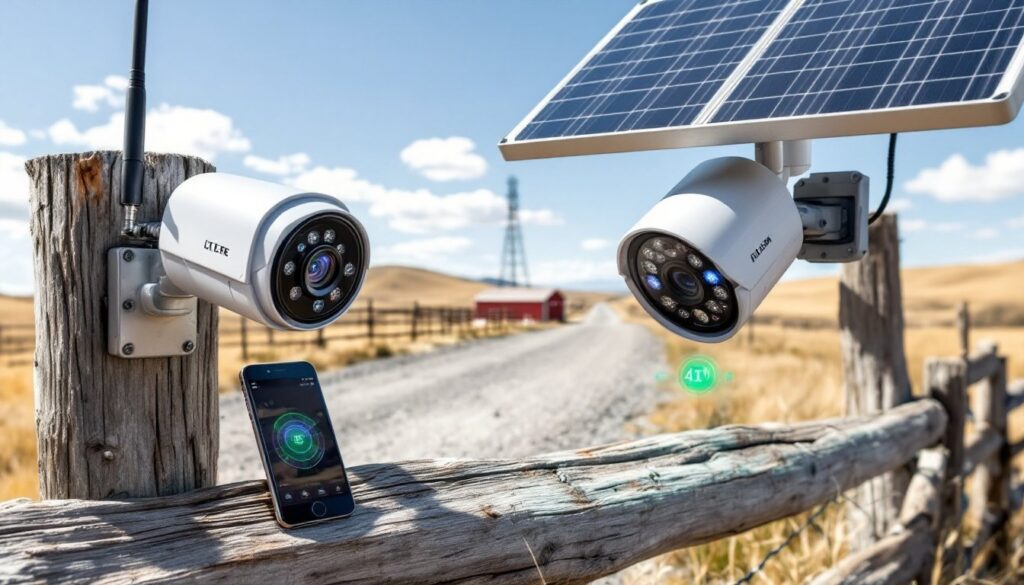
Installing a security camera shouldn’t depend on whether there’s Wi-Fi nearby. LTE security cameras solve that problem by connecting directly to cellular networks, no router, no ethernet cable, no range limitations. They’re ideal for construction sites, vacation properties, farms, RV parking, and anywhere traditional internet infrastructure doesn’t reach or isn’t reliable. This guide covers how LTE cameras work, what features matter most, and what ongoing costs to expect before mounting one on a fence post or barn wall.
Table of Contents
ToggleKey Takeaways
- LTE security cameras connect directly to cellular networks without Wi-Fi or internet infrastructure, making them ideal for remote locations like construction sites, farms, and vacation properties.
- Motion detection zones, night vision with at least 65 feet of infrared range, and IP65 weather resistance are essential features that distinguish reliable LTE cameras from budget alternatives.
- Data consumption varies from 2–5GB monthly for typical motion-triggered 1080p footage to 20–40GB for continuous streaming or 4K, so budget $10–$25 monthly for cellular plans plus initial setup costs of $120–$400.
- LTE security camera systems can operate indefinitely on solar panels paired with rechargeable batteries, eliminating the need for constant power or internet infrastructure.
- Expect 2–5 second latency on live streams and verify at least two bars of LTE coverage at your installation site before purchasing hardware.
- Unlocked SIM models offer flexibility to switch carriers if signal is weak, while local SD card backup (128GB holds 3–5 days of footage) reduces cloud costs and protects against connectivity drops.
What Is an LTE Security Camera and How Does It Work?
An LTE security camera transmits video and data over a 4G LTE cellular network instead of using Wi-Fi or a hardwired internet connection. It contains a SIM card, either embedded or removable, that connects to a carrier’s cell tower, just like a smartphone. When the camera detects motion or receives a live-view request, it uploads footage to cloud storage or streams it to a mobile app using cellular data.
Most models operate on 12V DC power from a solar panel, battery pack, or low-voltage transformer. Some higher-end units accept PoE (Power over Ethernet) but still use LTE for data transmission, which is useful when power infrastructure exists but internet does not. The camera’s processor compresses video, typically using H.264 or H.265 codec, to reduce data consumption, a critical consideration since cellular data isn’t unlimited in most plans.
Latency is generally higher than Wi-Fi systems. Expect a 2–5 second delay on live streams depending on signal strength and network congestion. Recording quality ranges from 1080p to 4K, though higher resolution burns through data plans quickly. Many models include local SD card storage (up to 512GB) as a fallback when signal drops or to reduce cloud costs.
Signal strength matters. A camera needs at least two bars of LTE coverage for reliable operation. Installers should test signal at the mounting location using a smartphone on the same carrier before committing to hardware. External antennas can boost weak signals but add $40–$80 to the setup cost.
Key Benefits of Using LTE Security Cameras
No Wi-Fi Required
Eliminating Wi-Fi dependence removes several failure points. There’s no router to reboot, no password changes to update in the field, and no range extenders to troubleshoot. This makes LTE cameras plug-and-play for users who don’t want to configure network settings or run ethernet cable across a property. Installation is often as simple as mounting the bracket, inserting a SIM card, and powering on.
They’re also immune to Wi-Fi jamming devices, which are increasingly used by intruders to disable wireless security systems. While cellular jamming equipment exists, it’s less common, more expensive, and illegal to operate under FCC regulations, making LTE cameras harder to defeat.
Remote Location Monitoring
LTE cameras excel in locations where running internet service is impractical or cost-prohibitive. A construction site might not have utility hookups for months. A hunting cabin in timber country might be miles from the nearest cable or fiber line. A boat slip or remote gate on a ranch might require surveillance but sits 800 feet from the nearest structure with Wi-Fi.
Solar-powered LTE cameras can operate indefinitely in these environments. Pair a 20W solar panel with a 10,000mAh battery, and the system runs through cloudy stretches and winter months with shorter daylight. Most installers mount the panel facing south (in the Northern Hemisphere) at a 30–45° angle for optimal year-round charging.
Essential Features to Look for in an LTE Security Camera
Night vision quality separates usable cameras from junk. Look for models with infrared LEDs rated for at least 65 feet of visibility, or starlight sensors that capture color footage in low light without IR. Cheaper cameras wash out faces and license plates after dark.
Motion detection zones let users define specific areas to monitor, which drastically reduces false alerts from swaying branches or passing traffic. Advanced models use PIR (passive infrared) sensors plus to pixel-based detection, filtering out non-human movement and conserving data by not uploading irrelevant clips.
Two-way audio adds a deterrent factor. An operator can warn off trespassers or communicate with delivery drivers. Speaker quality varies: test it before relying on it for anything beyond basic communication.
Weather resistance is non-negotiable for outdoor installs. The camera housing should meet at least IP65 rating (dust-tight, protected against water jets). For coastal or industrial environments with corrosive exposure, look for IP66 or IP67. Check that the manufacturer specifies an operating temperature range that covers local extremes, many budget models fail below 15°F or above 110°F.
Local storage backup matters when signal cuts out. A 128GB microSD card holds roughly 3–5 days of motion-triggered 1080p footage, depending on compression settings. Some cameras auto-upload stored clips when connectivity resumes, others require manual retrieval.
Pan-tilt-zoom (PTZ) capability is useful for monitoring large areas with a single camera, but it increases power draw and complexity. A fixed wide-angle lens (110–130°) often covers more practical ground for DIY installs.
Best Use Cases for LTE Security Cameras
Construction sites top the list. Theft of tools, copper wire, and materials is common, and sites rarely have internet service during early phases. Mount cameras on temporary fencing or scaffolding with anti-theft brackets and tamper alerts.
Vacation homes and seasonal cabins benefit from LTE monitoring when owners don’t want to pay for year-round internet service. Cameras can detect break-ins, frozen pipe leaks (via environmental sensors), or unauthorized access during off-season months.
Agricultural operations use LTE cameras to monitor livestock, water tanks, equipment sheds, and access gates across properties spanning hundreds of acres. A single camera at a remote barn or pasture gate saves hours of physical patrols.
RVs, boats, and trailers parked in storage lots or on remote property can be monitored without relying on the lot’s Wi-Fi (if it even exists). Battery-powered LTE cameras with magnetic mounts can be repositioned as needed.
Temporary event security, festivals, markets, pop-up retail, benefits from cameras that deploy quickly without IT infrastructure. After the event, the camera moves to the next location.
Urban properties with unreliable internet also fit the bill. If the ISP experiences frequent outages or the building’s Wi-Fi is overloaded, an LTE camera provides a backup monitoring layer that doesn’t share bandwidth with streaming devices or smart home gear.
Data Plans and Operating Costs: What to Expect
Cellular data is the recurring cost that catches most buyers off guard. A camera uploading 1080p motion clips consumes roughly 2–5GB per month under typical use (10–15 motion events per day, 30-second clips). Continuous streaming or 4K resolution can push usage to 20–40GB per month.
Most carriers and camera manufacturers offer dedicated IoT (Internet of Things) data plans. Expect to pay $10–$25 per month for 5–10GB, with overages costing $5–$15 per additional gigabyte. Some brands bundle the first year of service with the camera purchase, others require separate activation.
Check whether the camera uses a proprietary carrier (locked SIM) or accepts unlocked SIMs from any provider. Unlocked models offer flexibility, users can shop for the best rate or switch carriers if signal is weak. Locked models simplify setup but may cost more over the camera’s lifespan.
Prepaid vs. postpaid plans also factor in. Prepaid plans avoid surprise bills but require manual renewal. Postpaid plans auto-renew but can rack up overage charges if the camera uploads more than anticipated.
To minimize costs, enable local recording as the primary mode, with cloud upload reserved for critical alerts. Set motion sensitivity conservatively and use scheduling to disable uploads during low-risk hours. Some cameras allow data usage caps in the app, once the monthly limit is hit, uploads pause until the next billing cycle.
Factor in the upfront camera cost ($120–$400 for most models) plus solar panel and battery if needed ($60–$150), and the total first-year cost ranges from $300–$700 depending on configuration and plan. After that, expect $120–$300 annually in data fees.